
Below you will find the lecture programme for the year; for most lectures there are details of the lecturer and a description of the lecture content in brief. These details should go onto the website www.wmctc.co.uk very soon. Please visit the site to check on additional events and details where I have not included them here. Lectures start at 7pm in the Haworth Lecture Theatre. Please apply for (free) tickets at wmctclecture@gmail.com:state number required, your school's name and give an email contact. All students must be accompanied at all times when on the university site and in the lecture. A risk assessment is available on our website. We look forward to seeing you at these events. Best wishes, Justin Wade Secretary |
| Date | Title | |
| Tuesday 6th October 2026 7pm (Sixth Form Lecture) | "POETRY, CHEMISTRY AND EVERYTHING IN BETWEEN: SIR HUMPHRY DAVY'S NOTEBOOKS"
| Details |
| Tuesday 3rd November 2026 7pm (Sixth Form Lecture) P.F.FRANKLIN MEMORIAL LECTURE |
"INFLUENCING DRUG DELIVERY THROUGH CHEMICAL BIOLOGY" | Details |
| Tuesday 17th November 2026 7pm (Sixth Form Lecture) | "ATOMIC STRUCTURE AND BONDING" | Details |
| Tuesday 24th November 2026 7pm (Sixth Form Lecture | "IR SPECTROSCOPY" | Details |
| Tuesday 26th January 2027 (Sixth Form Lecture) | "EXPLOSIVES: THE PAST, PRESENT AND FUTURE" | Details |
| Tuesday 2nd February 2027 7pm (Sixth Form Lecture) | "WHAT IS THE DIFFERENCE BETWEEN CHEMISTRY AND BIOLOGY?" | Details |
| Tuesday16th March 2027 | WMCTC Interschool Quiz for Years 9 and 10 Details for this event will appear on the website and be emailed out later in the year | Details to follow |
| Tuesday 2nd March 2027 (Sixth Form Lecture) | Photochemistry - shining light on molecules | Details |
| Tuesday 27th April 2027 (Revision Session | Organic Reaction Mechanisms | Details |
| 4th May 2027 | "ADVANCED LEVEL REVISION" | Details to follow |
|
"POETRY, CHEMISTRY AND EVERYTHING IN BETWEEN: SIR HUMPHRY DAVY'S NOTEBOOKS"  Professor Sharon Ruston, Lancaster University. |
|
P.F.FRANKLIN MEMORIAL LECTURE "INFLUENCING DRUG DELIVERY THROUGH CHEMICAL BIOLOGY"  Professor Andrew Wilson, University of Birmingham TOP of PAGE |
|
"ATOMIC STRUCTURE AND BONDING"  Dr Peter Hoare, University of Newcastle upon Tyne This lecture will include coverage of the fundamental topics at the start of most A-level chemistry courses - atomic structure, electron arrangements, relative atomic mass and a review of chemical bonding, including the different types of intermolecular interactions. The lecture is thus suitable for both yr12 and yr13 chemistry students and will be interactive with A-level exam style questions answered by the audience using an online audience voting system (Vevox) - please bring your mobile device! Early in the year or in the course this is an excellent point at which to review a part of the course that is fundamental to many other topics, The lecturer is a assessor and moderator for one of the big A-level boards so his insights to exams and exam technique will be helpful to all. The speaker is a former A-level chemistry teacher (20 yrs) now working in STEM outreach at a UK University and is a very experienced A-level chemistry examiner (31 yrs) for one of the main UK exam boards. |
|
"IR SPECTROSCOPY" 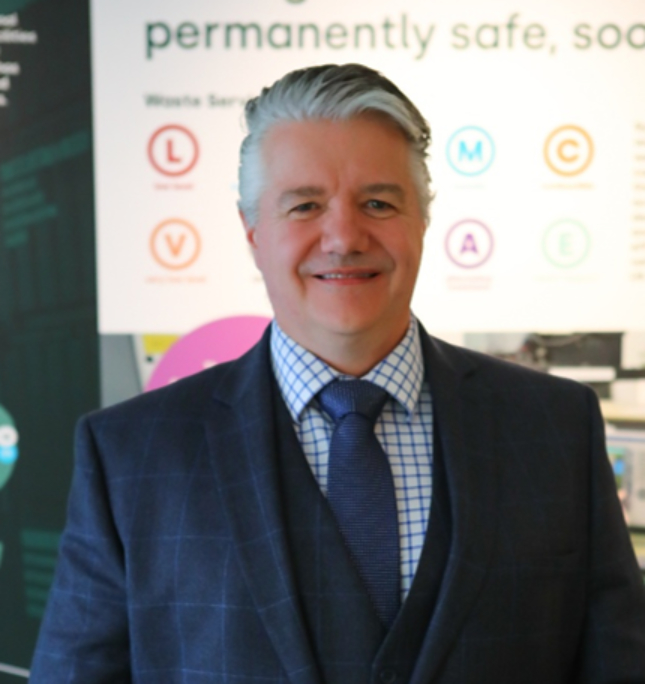 Dr Mark Read, University of Birmingham How do forensic scientists identify unknown substances found at a crime scene? How do Formula 1 engineers monitor the performance of cutting-edge fuels and lubricants? How do art conservators reveal the pigments used by famous painters without damaging priceless masterpieces? Infrared (IR) spectroscopy is a powerful analytical technique that helps answer all of these questions and more. By studying how molecules absorb infrared radiation, chemists can identify the functional groups present in compounds and build up a molecular fingerprint of unknown substances. IR spectroscopy is used across industry, from pharmaceutical development and environmental monitoring to materials science, forensic investigations, motorsport engineering and the analysis of historical artworks. For A-level chemists, IR spectroscopy is a key part of the compound identification toolkit, working alongside techniques such as mass spectrometry and NMR spectroscopy to determine molecular structure. Dr Mark Read is an Honorary Lecturer in the School of Physics and Astronomy at the University of Birmingham and is part of the Environmental Safety Case team for the Low Level Waste Repository with Nuclear Waste Services. Mark has extensive experience in science communication and outreach, having contributed to numerous public engagement activities and educational events. He was also involved with the Royal Society of Chemistry's "Spectroscopy in a Suitcase" programme, bringing hands-on spectroscopy activities directly to schools and colleges. Combining real-world industrial applications with practical examples from the A-level curriculum, this talk will provide an accessible and engaging introduction to one of chemistry's most important analytical techniques. |
|
"EXPLOSIVES: THE PAST, PRESENT AND FUTURE"  Professor Jackie Akhavan, Cranfield University. Professor Jackie Akhavan introduces the various types of explosions and explains the conditions under which a chemical reaction becomes an explosive. She explores the inputs to initiate the explosive and the subsequent outputs. In looking at the past she covers explosive mixtures and then introduces the concept of molecular explosives which are used today. Looking into the future she highlights current research activities. Her expertise is in high explosives which includes polymer bonded explosives and pastes, synthesis of energetic polymers by flow nitration and synthesis of smart polymers for detection of explosives, and control of particle size by spray drying. The unique facilities at Cranfield University allows Professor Akhavan and her team to manufacture up to 0.5kg of explosives, carry out safety and hazards tests as well as performance trials. |
|
Lecture) "WHAT IS THE DIFFERENCE BETWEEN CHEMISTRY AND BIOLOGY?"  Dr Stephen Fielden, University of Birmingham |
|
Photochemistry - shining light on molecules 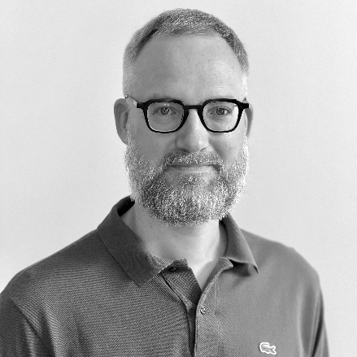 Professor Basile Churchod, University of Bristol |
|
Organic Reaction Mechanisms Dr Peter Hoare, University of Newcastle upon Tyne Attendees will each be given a booklet of Revision Notes. The lecture is suitable for both yr12 and yr13 chemistry students and will be interactive with A-level exam style questions answered by the audience using an online audience voting system (Vevox) - please bring your mobile device! The speaker is a former A-level chemistry teacher (20 yrs) now working in STEM outreach at Newcastle University and is a very experienced A-level chemistry examiner (31 yrs) for one of the main UK exam boards. |